
PRODUCT REVIEW
Anker 323 Power Bank Review
A research-based review of the Anker 323 Power Bank (PowerCore PIQ, A1334), using official manufacturer specifications and current battery-travel guidance.
The Anker 323 is a straightforward 10,000mAh power bank rather than a high-wattage USB-C PD model. Anker rates model A1334 at 37Wh with 5V/2.4A input and 5V/2.4A output. It also includes a trickle-charging mode intended for lower-power accessories.
Simple everyday 10,000mAh charging
Anker 323 Power Bank (PowerCore PIQ, A1334)
A 10,000mAh / 37Wh power bank with straightforward 5V/2.4A charging and a dedicated trickle-charging mode for lower-power devices.
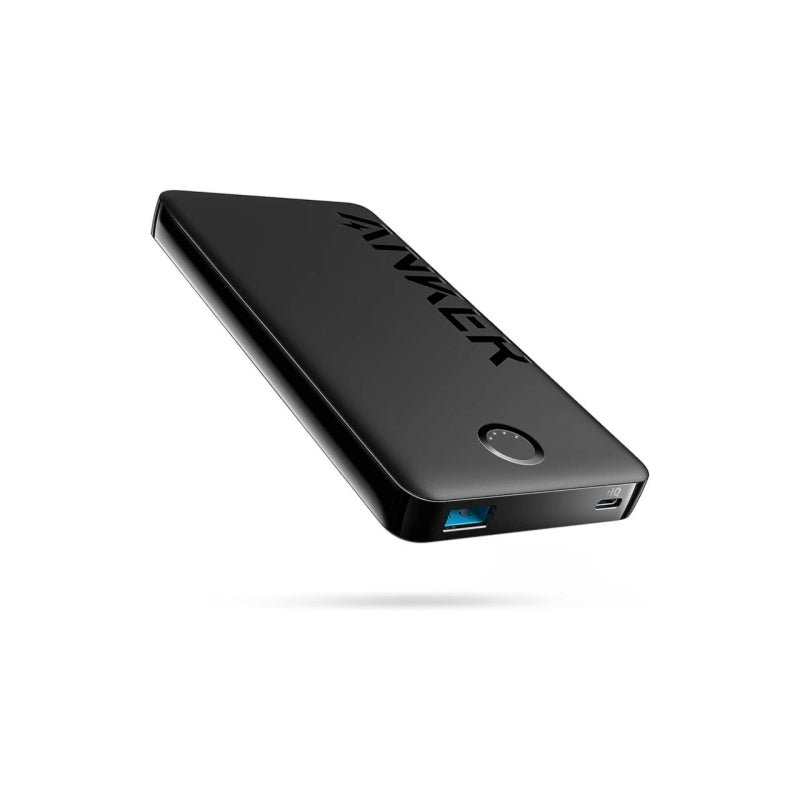
Core specifications verified against the official Anker A1334 user guide.
Image source has been checked.
Key features
- 10,000mAh cell capacity
- 37Wh rated energy
- 5V / 2.4A input
- 5V / 2.4A output
- Trickle-charging mode for low-power devices
Pros
- Official specifications are clearly documented by Anker
- 37Wh capacity is comfortably below the common 100Wh air-travel threshold
- Trickle-charging mode is useful for watches and Bluetooth earphones
Considerations
- Charging output is limited to 5V / 2.4A rather than modern USB-C PD fast-charging levels
- Simultaneous charging and recharging are not supported
- Current Philippine merchant pricing still needs verification
Where to check
Prices and availability may change.
Charging performance
Anker documents the A1334 with 5V/2.4A input and 5V/2.4A output. That makes it a straightforward phone and accessory backup rather than a modern high-wattage USB-C Power Delivery power bank. Buyers whose devices benefit from higher USB-C PD wattages should consider a newer alternative.
Capacity and everyday use
The Anker 323 has a documented 10,000mAh cell capacity and 37Wh energy rating. This capacity class is aimed at portable everyday backup power rather than the extended runtime of larger 20,000mAh-class models. Actual device recharges vary because conversion losses, device battery size, cable quality, and charging conditions affect usable energy.
Low-power device support
Anker documents a trickle-charging mode for lower-power devices. This is useful for accessories such as Bluetooth earphones and smartwatches that may require lower charging current than a phone.
Important limitations
The main limitation is charging speed: 5V/2.4A is well below the output available from current high-wattage USB-C PD power banks. Anker also states that simultaneous charging and recharging are not supported, so the power bank should not be treated as a pass-through charging solution.
Travel suitability
The documented 37Wh rating is below the FAA's standard 100Wh threshold for spare lithium batteries carried by passengers. Power banks must remain in carry-on baggage rather than checked baggage, and travelers should still check their airline's current rules before departure.
Who should buy it?
The Anker 323 is most suitable for buyers who prioritize a simple, documented 10,000mAh backup battery for phones and smaller accessories and who do not need high-wattage USB-C PD charging.
Who should skip it?
Skip this model if fast USB-C Power Delivery, laptop-class charging, pass-through charging, or substantially more than 10,000mAh of capacity is important to you. Those needs are better served by newer higher-output power banks.
PILIWISE VERDICT
Our take
The Anker 323 makes the most sense for buyers who want a documented, simple 10,000mAh backup battery and do not require modern high-wattage fast charging. Its 37Wh rating is also comfortably below the standard 100Wh passenger-aircraft threshold cited by the FAA. Buyers who prioritize USB-C Power Delivery or faster laptop-class charging should compare newer alternatives.
EDITORIAL STANDARDS
How PiliWise prepared this content
Methodology
PiliWise reviews manufacturer documentation, merchant listings, pricing context, product positioning, and practical use cases. Research-based articles are clearly distinguished from hands-on testing.
Update policy
Articles are reviewed when specifications, merchant listings, pricing context, availability, or relevant guidance materially changes.
Corrections
Factual corrections are reviewed when supported by reliable sources. Readers may report errors through the PiliWise Contact page.
Report a correctionSOURCES
What this content is based on
- Anker 323 Power Bank (PowerCore PIQ) User Guide — A1334Anker · checked 2026-08-27
- PackSafe — Lithium BatteriesFederal Aviation Administration · checked 2026-08-27